Button Press Buyer's Guide
Find the right machine for your budget and your workflow. Whether you are pressing your first button or your ten-thousandth, the press matters.
What Is a Button Press?
A button press (also called a button maker or badge machine) is the tool that assembles pin-back buttons. You load a metal shell, your printed graphic, a clear mylar cover, and a pin-back into the press, then pull a handle. The press crimps everything together into a finished button.
Manual presses are the standard for most button makers. They are affordable, reliable, and fast enough for batches of a few hundred at a time. Pneumatic and electric presses exist for high-volume production, but most people never need them.
The two things that matter most when choosing a press: the button size (measured by the finished diameter) and the build quality. A well-built press should feel smooth on every pull and produce consistent results without jamming.
As an Amazon Associate, ButtonMaker earns from qualifying purchases. This does not affect our recommendations or what you pay.
Starter Pick: Happizza Single-Size
The cheapest way to start making buttons today
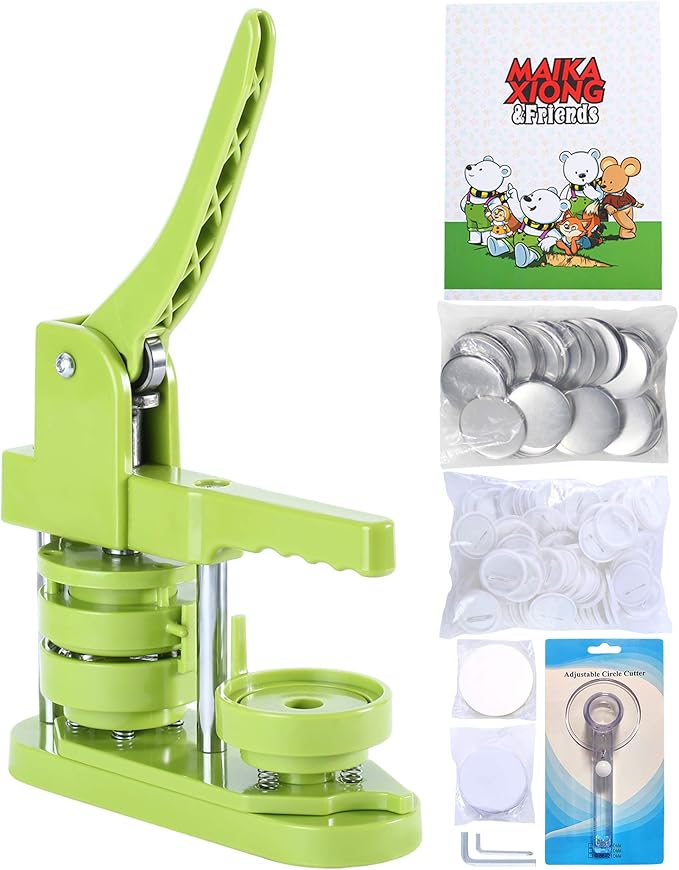
Happizza Button Maker Machine, 2.25" / 58mm (3rd Gen)
This is the best-selling button press on Amazon, and it is easy to see why. Under $40, it comes with a press, a 58mm mold, 100 button parts, a circle cutter, and even sample pictures to get you started right out of the box.
The 3rd generation design is installation-free. No assembly, no tools. This is where most button makers start.
One thing to know before you print: this is a 58mm press, and 58mm is not 2.25". It is 2.28", and it cuts at 70mm instead of 2.625". A US standard template run through it comes up about 1.7mm short of wrap on every side, which shows as bare metal at the rim. Set Press Standard to Metric on your account page and ButtonMaker uses the right cut size for you.
The Happizza system uses interchangeable molds, so you can add other sizes later without buying a whole new machine. Start here and expand when you are ready.
Best Value: Happizza Multi-Size
Two or three sizes in one machine
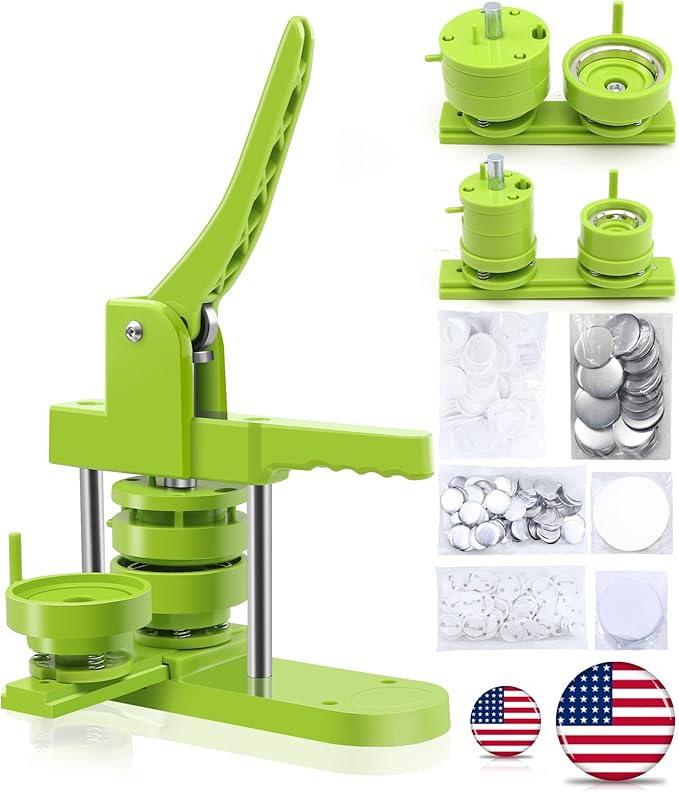
Happizza Multi-Size Button Maker, 1.25" + 2.25"
The most popular choice, bought over 1,000 times per month. It comes with two interchangeable molds (1.25" and 2.25"), 200 button parts split between both sizes, and a circle cutter. Slide-rail mold swapping takes seconds.
Having both sizes covers most use cases. The 2.25" is your workhorse for standard buttons, and the 1.25" is perfect for smaller promo pins, collectible sets, and flair. If you know you want more than one size, this kit saves you from buying molds separately.
A 3-size variant (1.25" + 2.25" + 3") is available on the same listing for $110.19 and includes 300 parts and a 75mm mold. Select the size option that fits your needs.
Premium: Happizza Metal Press
All-metal construction for serious production
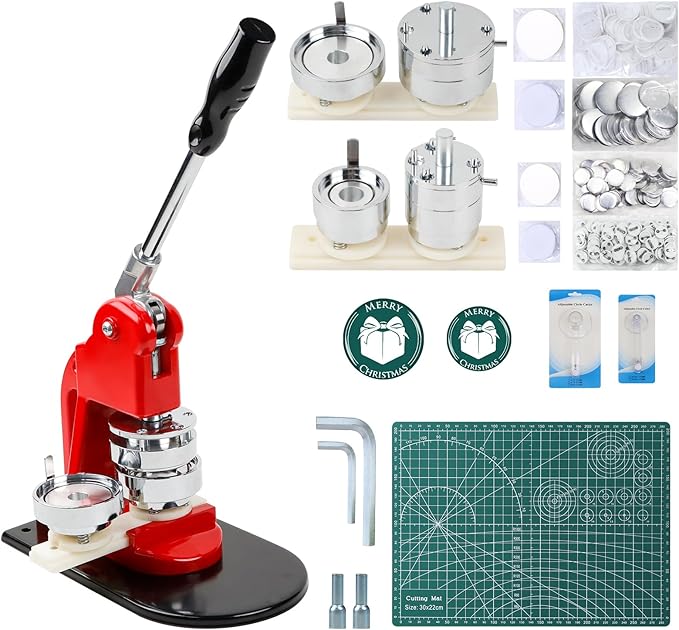
Happizza Metal Button Maker, 1.25" + 2.25"
Same Happizza interchangeable mold system, but with an upgraded all-metal frame. The metal construction gives you a smoother press action and more consistent results over thousands of presses. It also includes a cutting mat, which is a nice touch.
If you are making buttons for a business, selling at craft fairs, or producing buttons for schools and organizations on a regular basis, the metal press is worth the upgrade. It handles production runs without the wobble that plastic frames develop over time.
Available in multiple size configurations: 2.25"+3" ($199.99), 1"+1.25"+2.25" ($199.99), and 1.25"+2.25"+3" ($259.99).
Square Buttons: Happizza Square Press
A dedicated press for square-shaped buttons
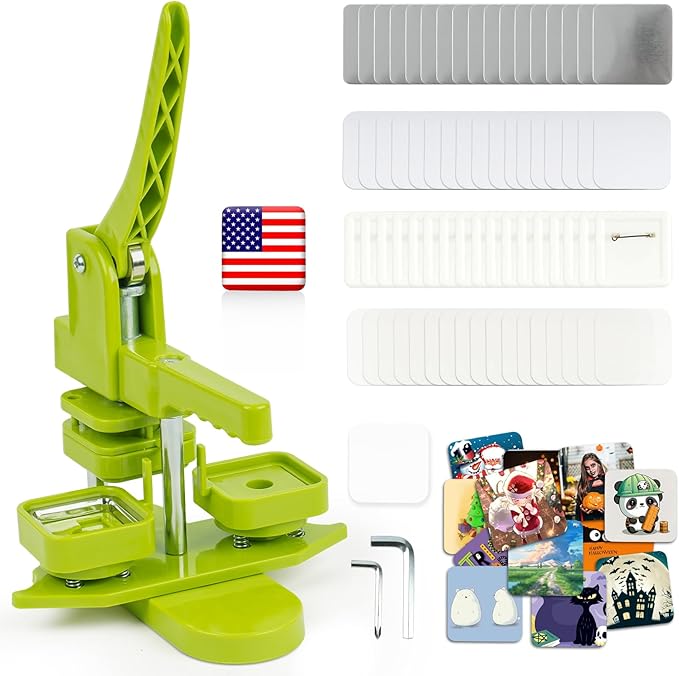
Happizza Square Button Maker, 50mm / 1.97"
A dedicated press for making square-shaped buttons. Same installation-free design as the round Happizza presses, but with a square mold. Comes with 100 square button parts and everything you need to start making square pins right away.
Square buttons stand out in a world of round pins. They are great for events, bands, political campaigns, and anywhere you want a different look. The 50mm (roughly 2") size gives you enough room for a design while keeping the button compact.
Add More Sizes: Interchangeable Molds
Expand your press without buying a new machine
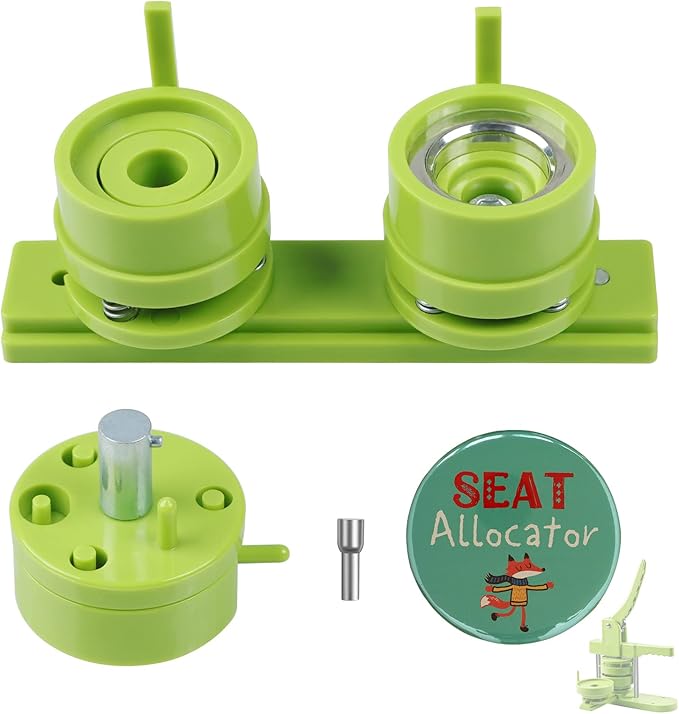
Happizza Round Mold
Add any round size to your Happizza press. Available in 1", 1.25", 2.25", and 3" on one listing. Pick the size you need and swap it in under a minute.
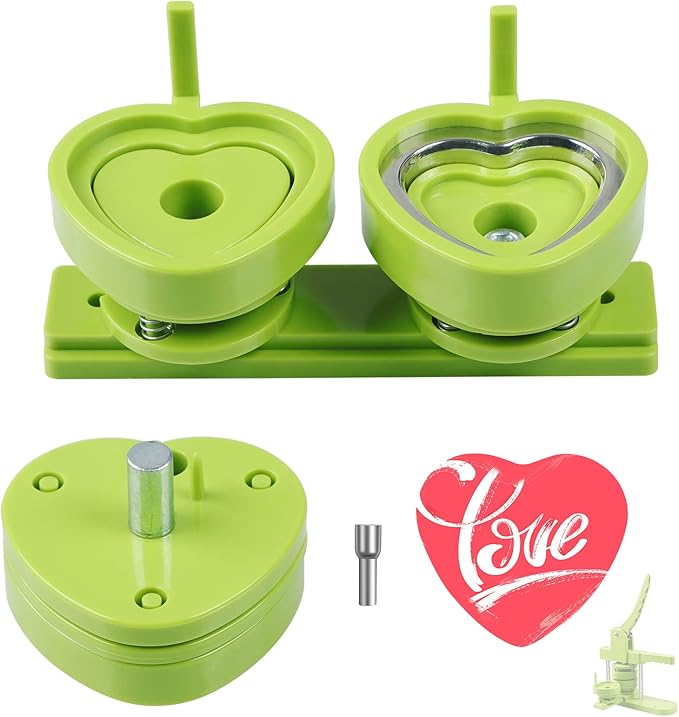
Happizza Heart Mold
Heart-shaped buttons for Valentine's Day, wedding favors, or anything where a round button does not fit the mood. Requires heart-shaped parts.
What to Look For in a Button Press
The stuff that actually matters when choosing
Die Size
Your press determines what size buttons you can make. The most common sizes are 1.25", 1.5", 2.25", and 3" circles. If you only buy one size, go with 2.25". Parts are the cheapest and most available, and it is the size most customers expect.
Build Quality
Pull the handle a few hundred times and you will understand why this matters. Cheap presses develop play in the mechanism, which leads to misaligned buttons and parts that do not crimp cleanly. If you plan to make more than a few hundred buttons, spend a little more on the press and save on parts instead.
Desk Mount vs. Clamp Mount
Most presses sit flat on your desk and stay put with their own weight. Some lighter models include a clamp or suction cups. A press that slides around while you are pulling the handle is frustrating. If your press feels light, clamp it down or put a rubber mat underneath.
Interchangeable Dies
Some presses accept swappable dies so you can switch sizes on the same machine. Multi-station presses have two or three die sets built in. Single-die presses are cheaper but lock you into one size. Think about whether you will want additional sizes within the next year.
Included Parts
Most starter kits include 200 to 500 button parts. That sounds like a lot, but you will burn through them faster than you expect, especially while learning. Check the cost of replacement parts for your press size before buying. The cheapest press is not always the cheapest to operate.
Frequently Asked Questions
Start with 2.25 inch. It is the most popular size, parts are cheap, and the buttons are large enough to show off your designs clearly. Add a 1.25" die later for smaller promo buttons if you need them.
The plastic/resin models ($40-$110) are lighter and perfectly fine for hobby use and small batches. The metal models ($170-$260) have a heavier frame, smoother press action, and hold up better over thousands of presses. If you are making buttons for a business or regularly doing production runs, the metal press is worth the upgrade. Both use the same interchangeable mold system.
Yes. You need to cut your printed designs into circles before loading them into the press. Some starter kits include a basic cutter. If yours does not, check our circle cutter guide. You can also use a Cricut or Silhouette to cut the printed PDFs.
Yes. The Happizza presses use a slide-rail system with interchangeable molds. You can buy the single-size starter and add molds later, or buy the multi-size kit that includes 2 or 3 molds. Swapping takes under a minute.
With a manual press and some practice, most people can make 100 to 200 buttons per hour. That includes loading parts, pressing, and removing the finished button. Speed depends on the press quality and whether your graphics are pre-cut.
Got a press? Start designing.
ButtonMaker handles the template, bleed, and PDF layout. You handle the creative part.
Start Free